Is 1900 Military Time the Same as 7 PM? (Yes, Here’s Why)
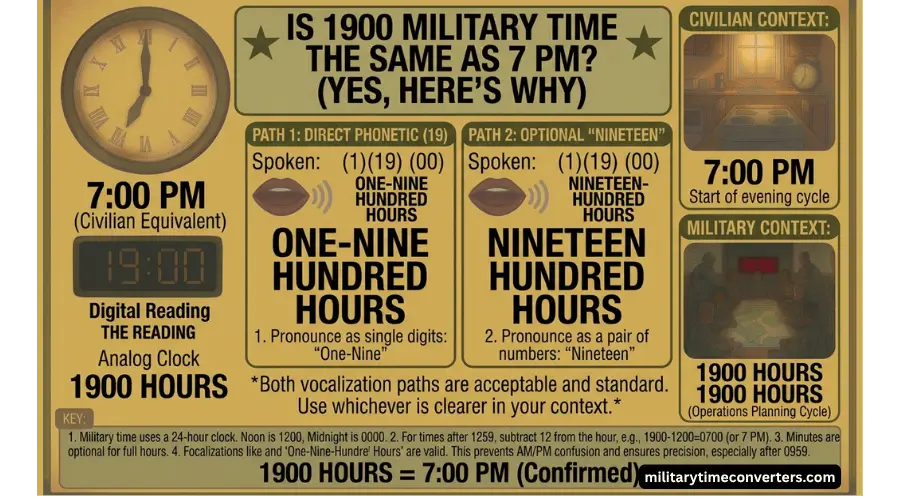
Short answer, yes. 1900 military time is 7:00 PM. Twentieth hour of the day, right at the edge of evening, and the math to get there is exactly the same subtraction you’ve been using since 1300.
If you’d rather not walk through the logic yourself, Military Time Converter has a free tool that does this instantly for any time you throw at it. For everyone else, here’s the full breakdown, pronunciation included.
Military Time → Standard Time
Type a 4-digit military time (e.g. 1830)
Minute-by-Minute Chart (1900 to 1959)
Here’s every minute inside this hour, including 1930.
| Military Time | Standard Time |
|---|---|
| 1900 | 7:00 PM |
| 1905 | 7:05 PM |
| 1910 | 7:10 PM |
| 1915 | 7:15 PM |
| 1920 | 7:20 PM |
| 1925 | 7:25 PM |
| 1930 | 7:30 PM |
| 1935 | 7:35 PM |
| 1940 | 7:40 PM |
| 1945 | 7:45 PM |
| 1950 | 7:50 PM |
| 1955 | 7:55 PM |
The hour holds at 19 throughout, minutes climbing until the clock rolls into 2000.
What is 1900 Military Time?
Take 19, subtract 12, and you land on 7. Add the colon, attach PM, and you’ve got 7:00 PM. Same subtract-12 routine as every PM hour before it, nothing new to learn here.
Worth knowing while we’re at it, our full military time chart lists every conversion we’ve covered so far if you want to jump around instead of reading linearly.
What About 1930 Military Time?
1930 works the same way, subtract 12 from the hour to get 7, keep the minutes at 30. That gives you 7:30 PM.
Why 1900 and 0700 Get Confused?
Both are technically “seven o’clock,” which is exactly the trap. 0700 opens the workday for a lot of people, while 1900 sits well into the evening, twelve hours apart despite sharing the same number.
This pairing shows up constantly in travel itineraries specifically, a flight or train listed at “7:00” without a clear AM/PM label leaves real room for a costly mistake, which is part of why so many transportation schedules default to the 24-hour format instead of risking it.
How to Tell 1900 and 0700 Apart at a Glance?
Anything 1300 or higher already had 12 added to it, so 1900 is your signal you’re deep into the evening, not the morning.
0700 always keeps that leading zero, an instant tell you’re looking at the start of the day instead. Our 0700 military time page covers this exact pairing from the morning side if you want the full picture there too.
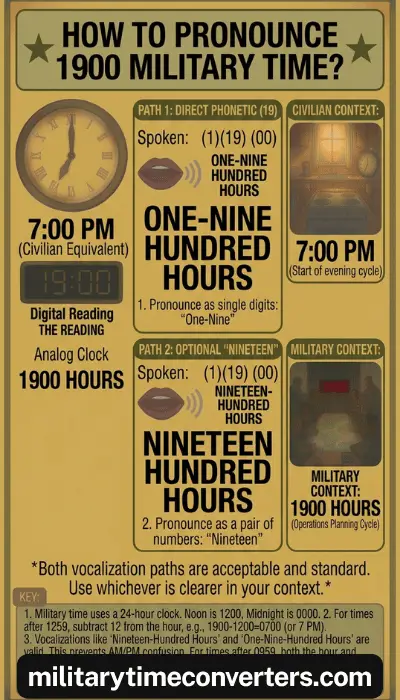
How to Pronounce 1900 Military Time?
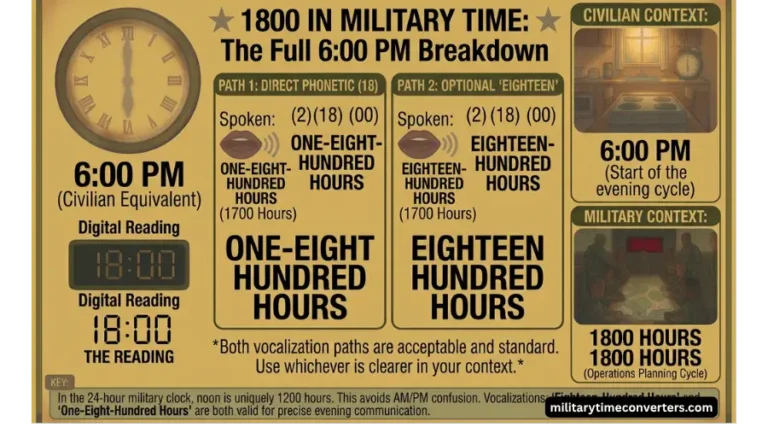
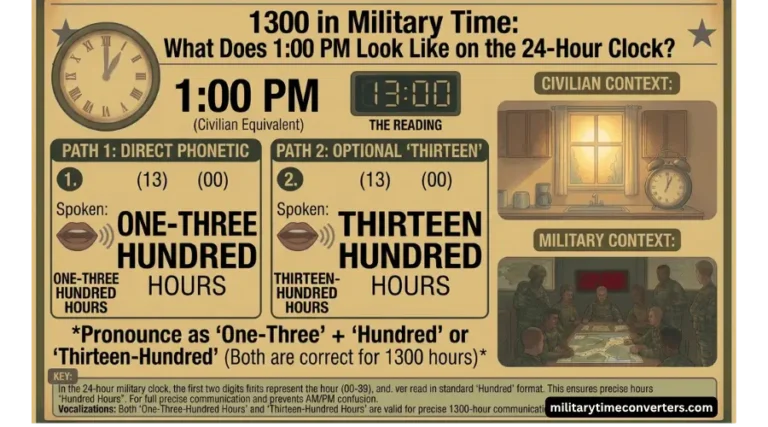
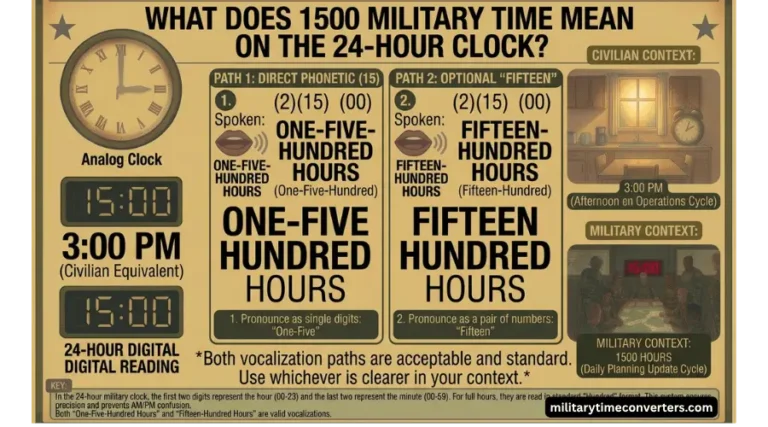
- Say it as “nineteen hundred hours,” or simply “nineteen hundred” once you’re past the formal version.
- For 1930, that becomes “nineteen thirty hours,” minutes read as their own two-digit number.
- Paired with Zulu time, it’s “nineteen hundred Zulu.” Learn how to write in military time.
“1900 in Zulu Time”
“1900Z” is this hour in Zulu time, the military’s version of UTC, fixed no matter your local time zone.
Our military time zones guide covers the letter-based system this connects to if you want the full context behind how Zulu ties into every other zone on the clock.
Real-World Use: The Naval First Watch
At 1900, the Navy’s “first watch” begins, running until just before midnight. This particular watch has held that same name and structure for centuries, going back to how naval crews have historically divided their day into fixed watch periods to keep the ship running around the clock, a tradition military time itself grew directly out of.
Outside naval life, this hour also marks a common planning window for the following day. Briefings and next-day orders are frequently distributed somewhere in the 1900-to-2100 stretch, giving units a clear picture of the day ahead before anyone turns in for the night.
Real-World Use: Hospital Handoffs and European Transit Boards
Plenty of hospitals that run 12-hour shifts starting at 0700 hand off to the evening team right at 1900, making this one of the more consistent shift-change points in healthcare scheduling, alongside patient chart closings and medication log updates.
Travel adds another layer to this hour too. European train networks and flight boards commonly display departures as 19:00 by default, not 7:00 PM, which is exactly why getting comfortable reading this format pays off well beyond a military or aviation context.
Conclusion
By now the pattern should be automatic: 1900 military time is 7:00 PM, and 1930 is 7:30 PM. Subtract 12 from the hour, keep the minutes exactly as they are, and you’ve got it.
Keep going with 2000 military time, or head back to 1800 military time to review the hour before this one. And if the math still feels like extra work, Military Time Converter turns any time into an instant answer.
Frequently Asked Questions
Summary