
Why US Uses AM / PM Instead of 24-Hour Time
The United States is one of a small handful of countries that still runs on the 12-hour AM/PM clock as its everyday default. Nearly every other country, most of Europe, Asia, Africa, and Latin America, reads time on the 24-hour clock instead. So why did the US end up the outlier? The answer isn’t really about the military, it’s about railroads, clock manufacturers, and a dose of geographic luck. If you ever need to switch between the two, our military time converter does it in seconds.
The 12-Hour Clock Has Its Own, Separate Origin Story
Before we get to the US specifically, it helps to know that the 12-hour clock isn’t some watered-down version of the 24-hour system, it actually came from a completely different source.
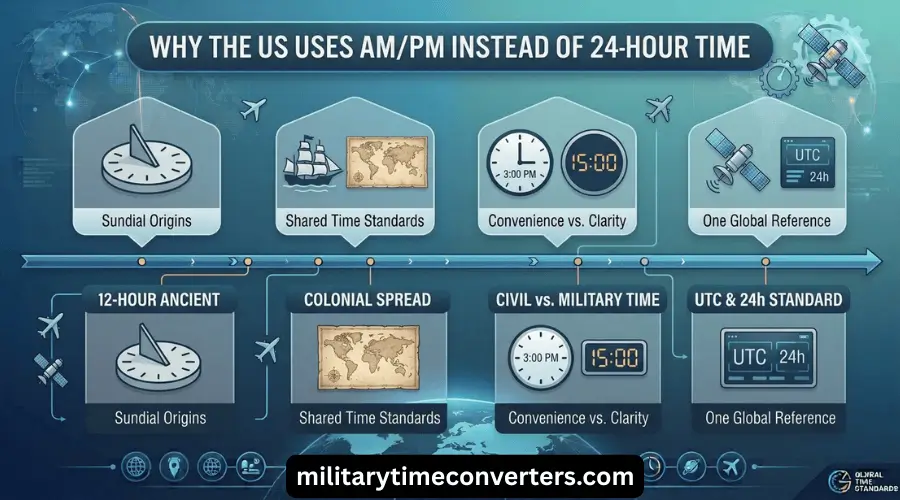
Historians trace the concept back to ancient Babylon, likely inspired by the 12 lunar cycles and 12 zodiac signs that structured their calendar. Egypt and Rome picked up the same 12-hour division for both day and night, using sundials in daylight and water clocks after dark.
How the 12-Hour Clock Won Out in England
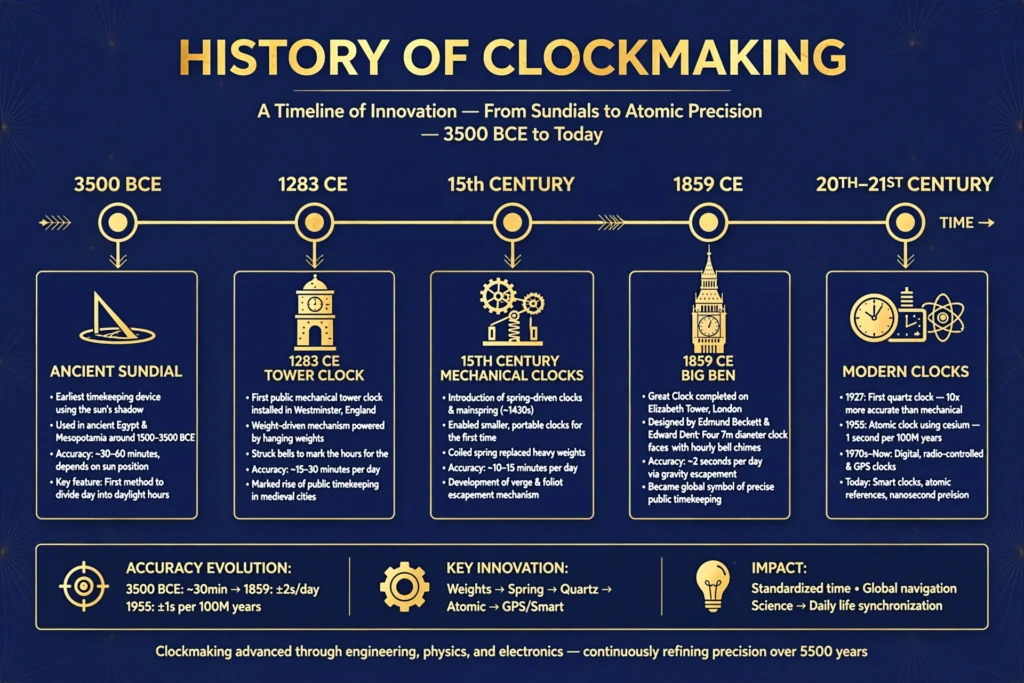
The real turning point came from clockmaking, not culture. England’s earliest mechanical clocks, including an iron-faced tower clock built in 1283, actually displayed a full 24-hour dial.
But as clockmaking technology matured through the 15th and 16th centuries, manufacturers found the 12-hour analog face simpler and cheaper to produce than its 24-hour counterpart. That practical, manufacturing-driven choice is what made 12-hour clocks the standard across northern Europe. England then carried that standard with it as the British Empire expanded, which is exactly why former British colonies, the United States included, inherited the 12-hour clock as their cultural default.
Why the US Specifically Never Switched
By the 19th century, most of the world had started shifting toward 24-hour time, especially once Italy officially adopted it in 1893 and other nations followed through the early 20th century. The US had every opportunity to do the same. It didn’t, for a few specific reasons.
No Railroad Crisis Forced the Issue Many countries adopted 24-hour time to fix railroad chaos. The US had the same problem but solved it differently. In 1883, American railroads created four standardized time zones – Eastern, Central, Mountain, and Pacific – which cleared up scheduling confusion without touching the clock format itself.
Geographic Isolation Removed the Peer Pressure Much of Europe adopted 24-hour time partly because neighbors were doing the same. The US didn’t have that pressure. Its closest neighbors, Canada and Mexico, either shared the 12-hour habit or used a mix, so there was no regional push.
The Clock Industry Had Already Picked a Side By the time 24-hour time became fashionable internationally, American clock and watch manufacturers were already deeply invested in 12-hour products, and consumers expected them.
Where 24-Hour Time Still Shows Up in America
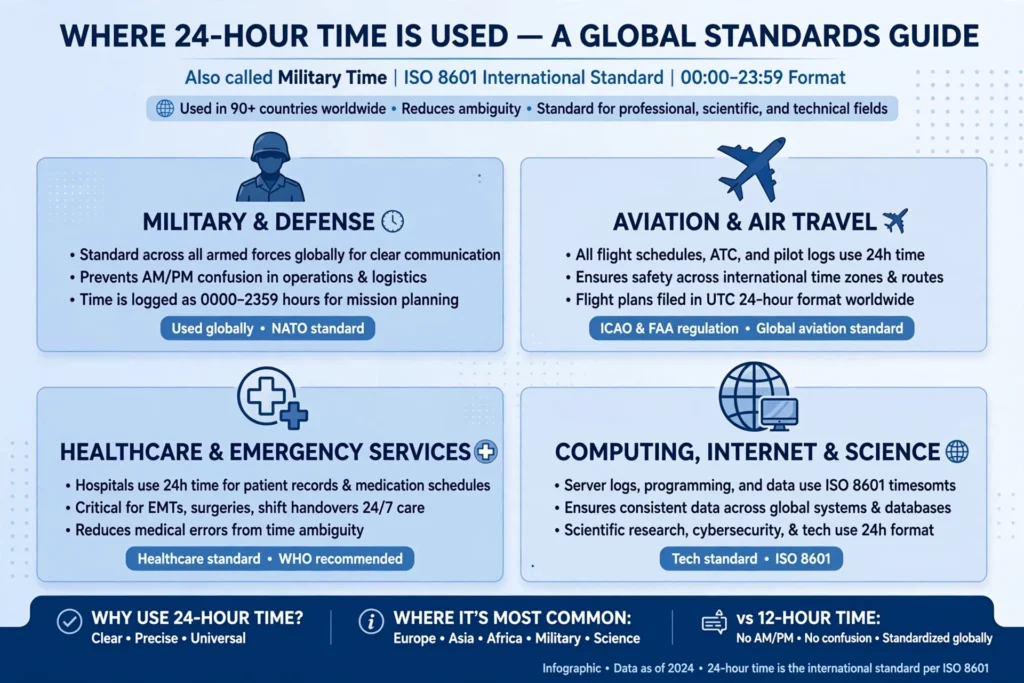
The US never abandoned 24-hour time entirely, it just narrowed it down to the contexts where ambiguity is genuinely dangerous.
Aviation
Flight schedules and air traffic coordination can’t risk an AM/PM mix-up.
Healthcare
Medication charts use the format to prevent dosing errors, writing 2400 for midnight instead of 12:00 AM.
Computing and International Business Systems and cross-border scheduling often default to ISO 8601.
Does Anywhere Else Still Use 12-Hour Time?
The US isn’t entirely alone.
Countries including India, Australia, New Zealand, Canada, and the Philippines also default to the 12-hour clock for everyday use. Even in countries that officially use 24-hour time, like the UK, people still say ‘3 o’clock’ out loud rather than ‘1500 hours.’ The 12-hour habit is deeply human, not just American.
Conclusion
The US sticking with AM/PM isn’t a quirky accident, it’s the result of inherited British clockmaking, a railroad system that solved its own problems, and geographic luck that removed outside pressure.
It may never fully switch, but that’s fine. In the places where precision matters most, aviation, medicine, and computing, Americans already speak fluent 24-hour time.